Only a few days left to make it a Christmas gift · Order before Dec 15
Free shipping on orders over $365/€319
14-Day Returns* · 2-Year Warranty · Worldwide Shipping, US Included
Want it under the tree? · Order before Dec 15
Free shipping on orders over $399/€350
14-Day Returns*
2-Year Warranty
Worldwide Shipping, US Included
At the time, puerperal fever, a bacterial infection that affects women after childbirth, was a major cause of mortality in maternity wards. The disease seemed to appear randomly, and its causes were unknown. Semmelweis noticed that the mortality rate from puerperal fever was significantly higher in the ward where doctors and medical students attended to patients, compared to the ward where midwives did. He hypothesized that the disease was being transmitted through some kind of "cadaverous particles" that were being carried on the hands of doctors and students, who often performed autopsies in the morgue before coming to the maternity ward.
Semmelweis proposed a radical solution: handwashing with soap and water before entering the maternity ward. He also suggested that doctors and students should wash their hands with chlorinated water, which was a novel idea at the time. Despite the simplicity and logic of his proposal, Semmelweis faced fierce resistance from his colleagues.
Semmelweis's work on puerperal fever may seem unrelated to neurology at first glance. However, his contributions to the field of medicine laid the groundwork for later advances in neurology. The germ theory of disease, which Semmelweis helped establish, is a cornerstone of modern neurology.
Ignaz Philipp Semmelweis was born on July 1, 1818, in Budapest, Hungary. He studied medicine at the University of Vienna, where he developed a keen interest in obstetrics. In 1846, Semmelweis was appointed as an assistant to Professor Johann Klein, the head of the maternity ward at the Vienna General Hospital. It was during this period that Semmelweis made a series of observations that would change the course of medical history.
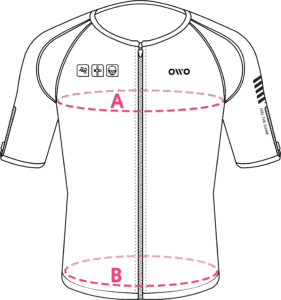
Measure your chest (A) and hips (B) following our indications.
The reference measurement will always be the larger of the two (A or B).
Look in the chart to which size corresponds to that measurement.
| Size | Reference measurements | |
|---|---|---|
| Inches | Centimeters | |
| 2XS | 25.6 – 29.4 | 65 – 74 |
| XS | 29.5 – 32.6 | 75 – 82 |
| S | 32.7 – 36.1 | 83 – 91 |
| M | 36.2 – 39.7 | 92 – 100 |
| L | 39.8 – 42.8 | 101 – 108 |
| XL | 42.9 – 46.3 | 109 – 117 |
| 2XL | 46.4 – 49.9 | 118 – 126 |
| 3XL | 50 – 53 | 127 – 134 |
| 4XL | 53.1 – 55.9 | 135 – 142 |