An Incised Serif Type Family

This typeface is part of The Monotype Library.
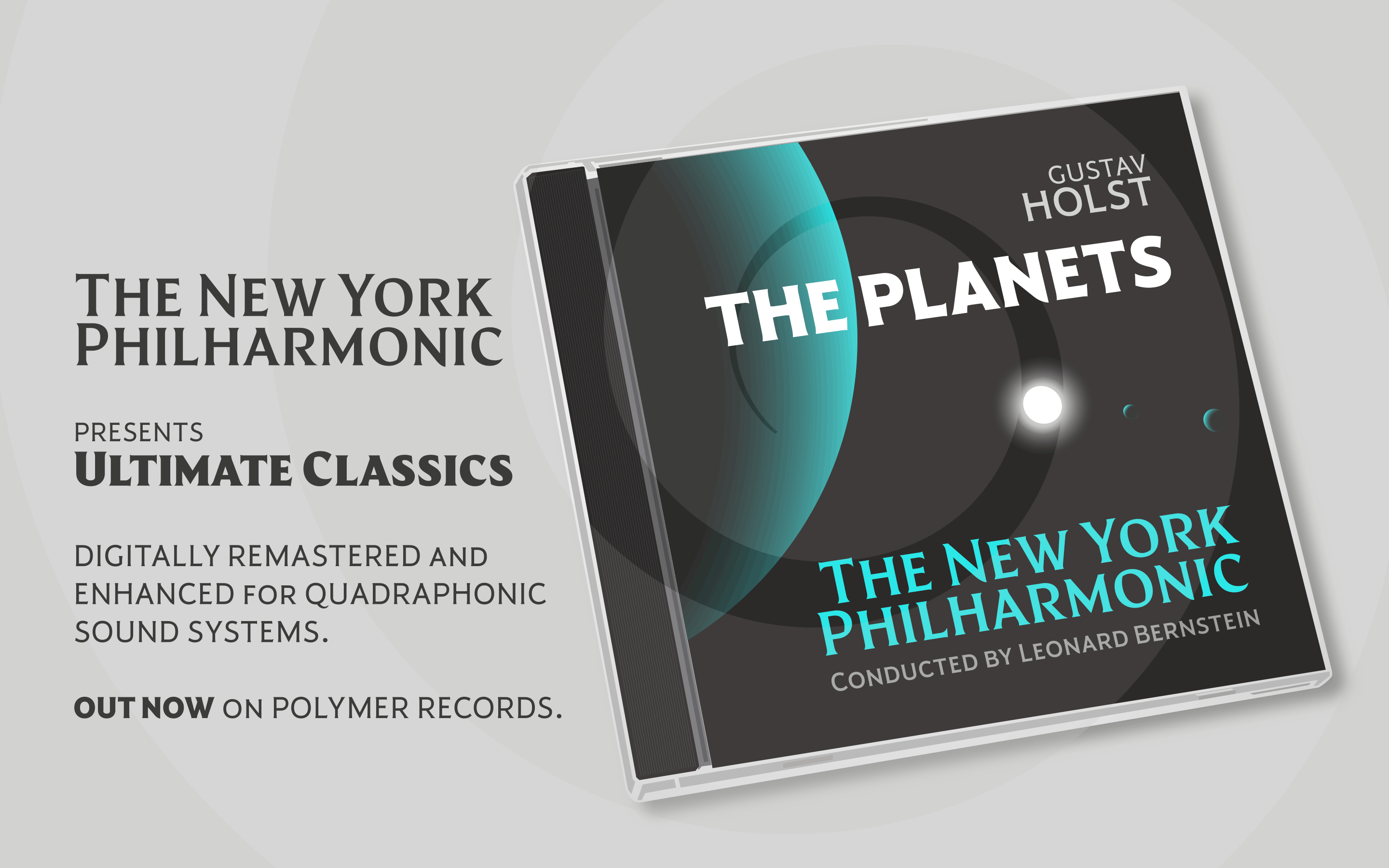
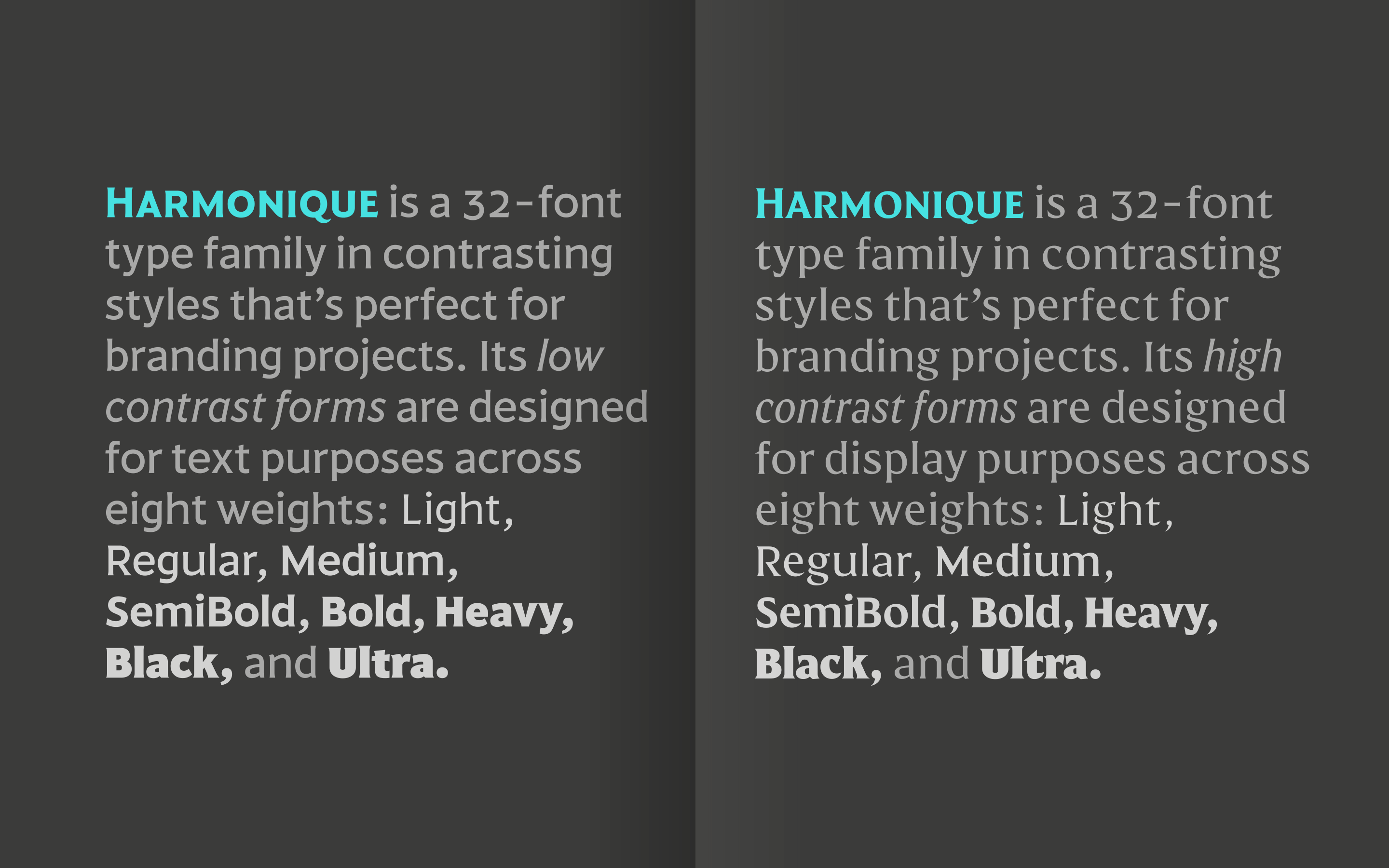
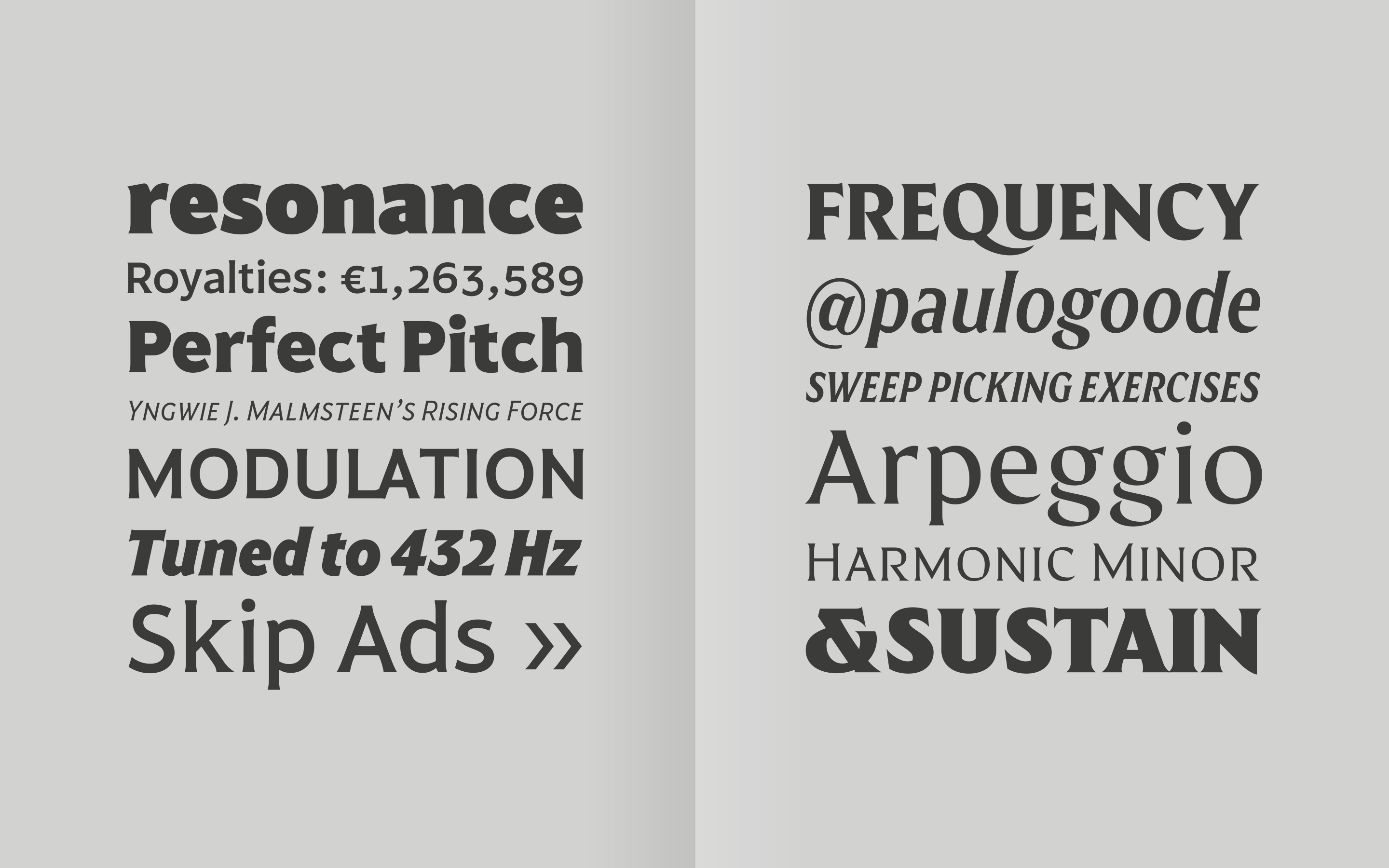
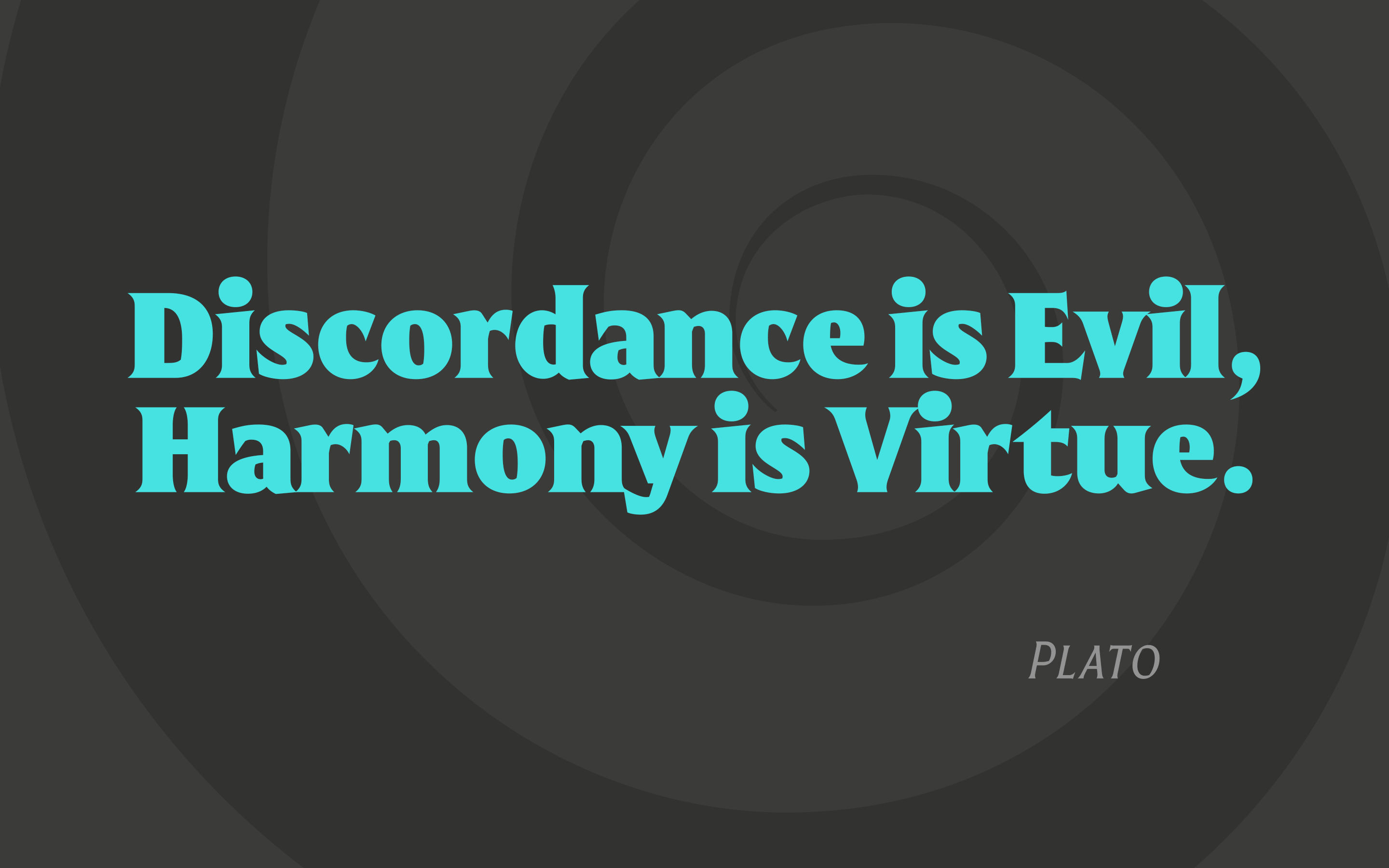
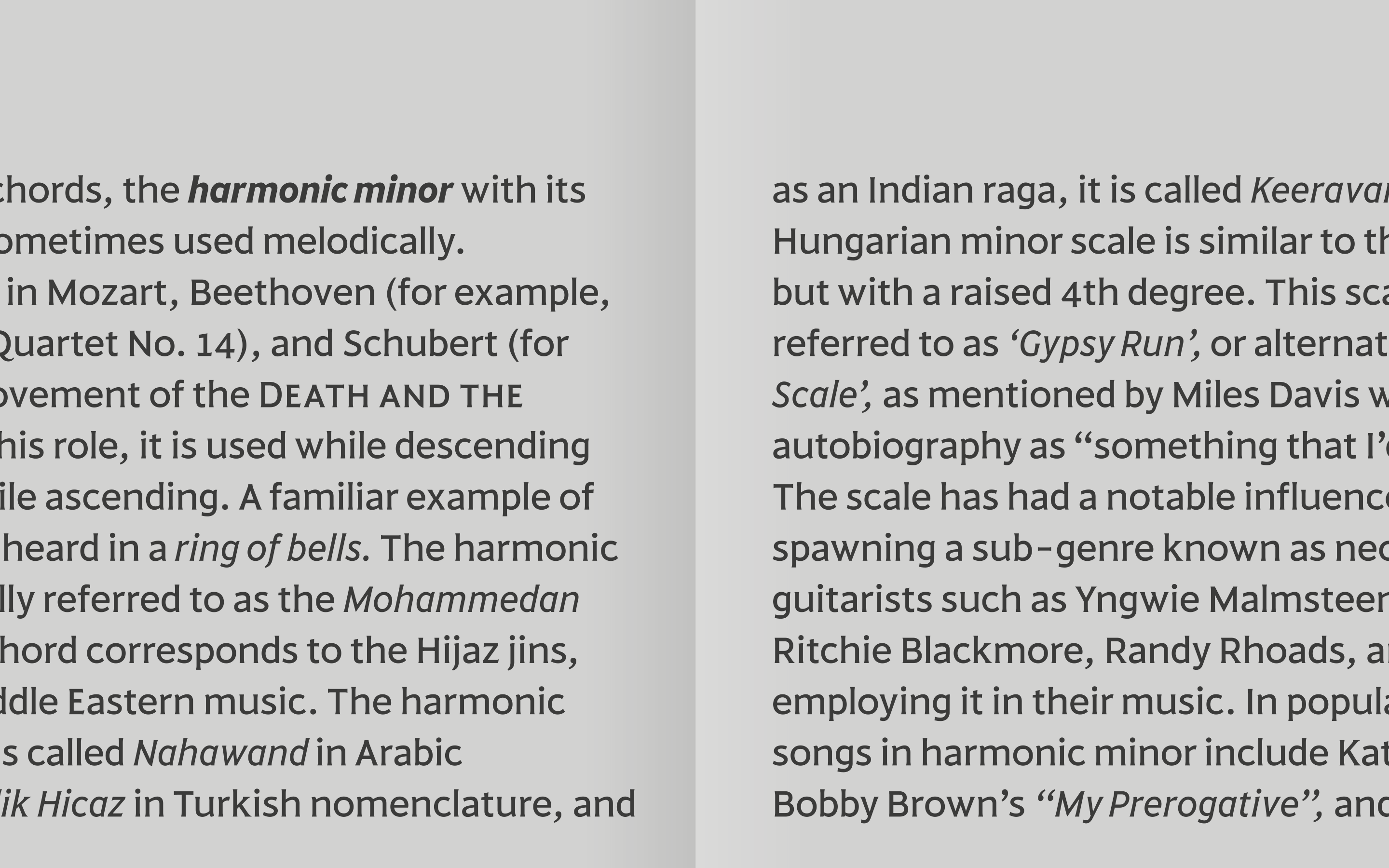
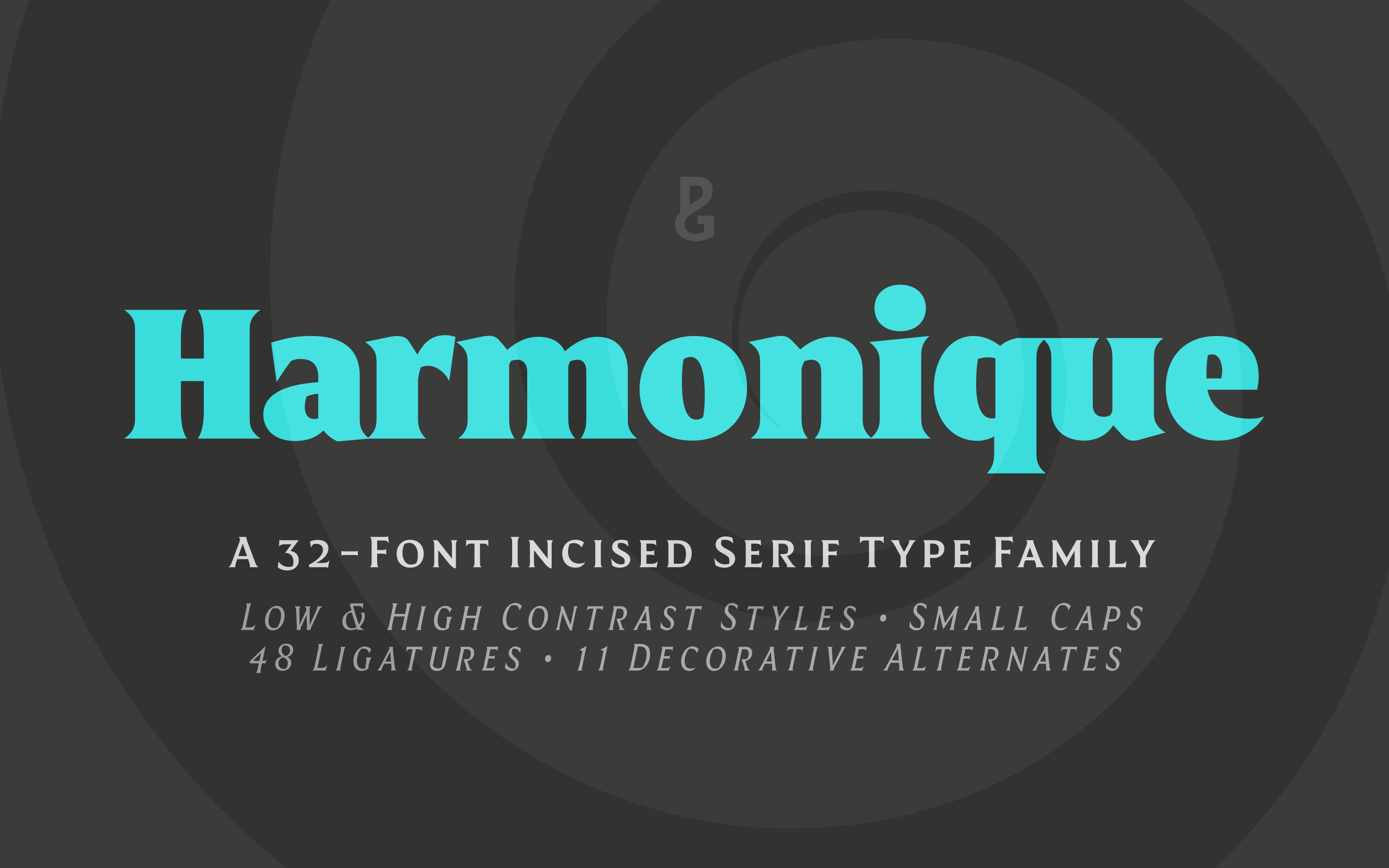
Harmonique is an incised serif typeface designed for both text and display purposes. It’s a type family of two styles that work in harmony together to add distinction and personality to your own typographic compositions. Harmonique’s low contrast forms have the appeal of a humanist sans serif typeface. Its subtly flared terminals evoke the craft and skill of a signwriter’s steady hand, creating an authentic and pleasing aesthetic. Harmonique Display is more calligraphic in its structure – as if drawn by a wide-nibbed pen. This style is accentuated by aggressively barbed serifs and chiselled arcs in its counters and bowls. These strong characteristics help to define a flamboyant, confident style that will provide impact and flair to your headlines, titles and identity designs.
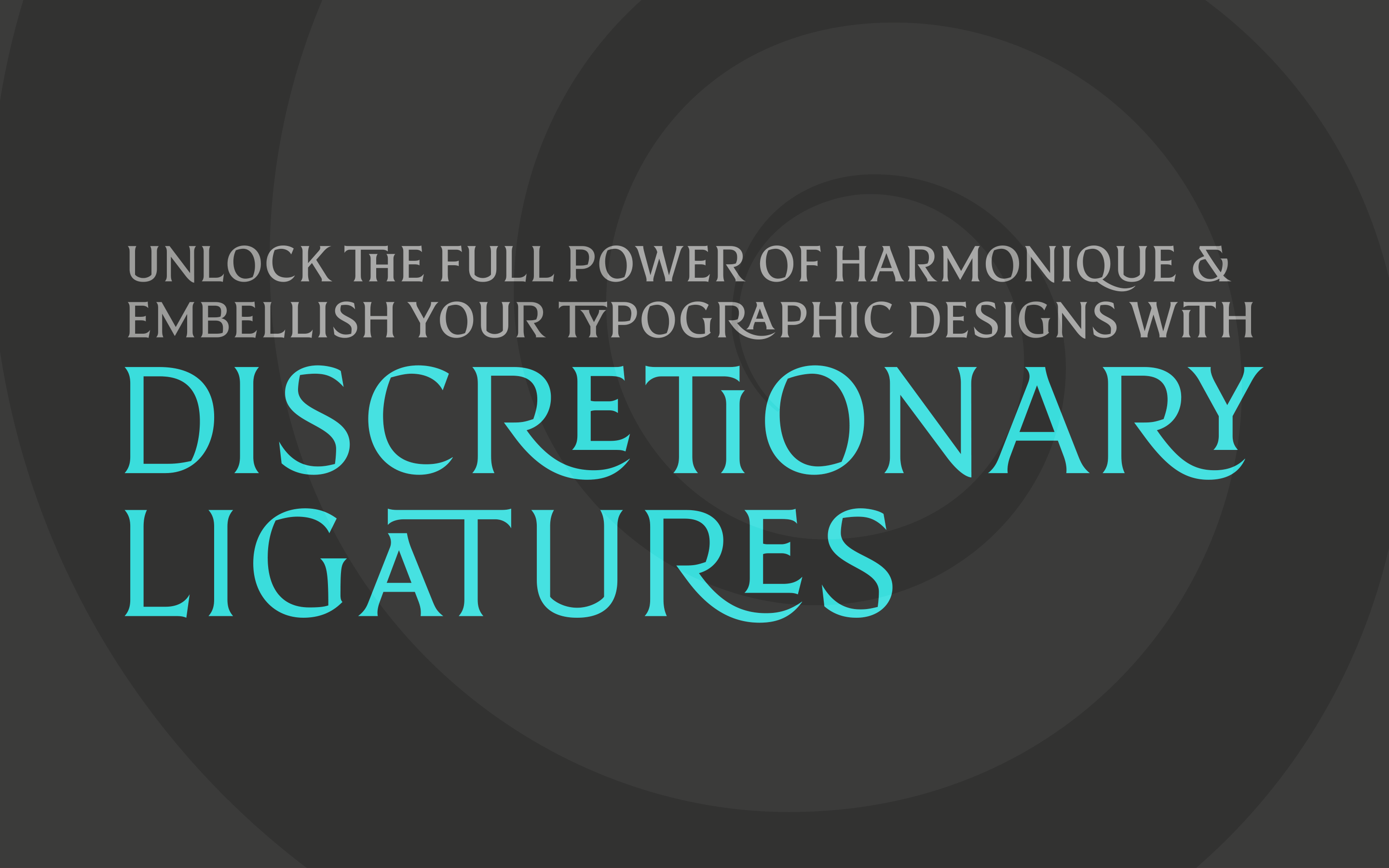
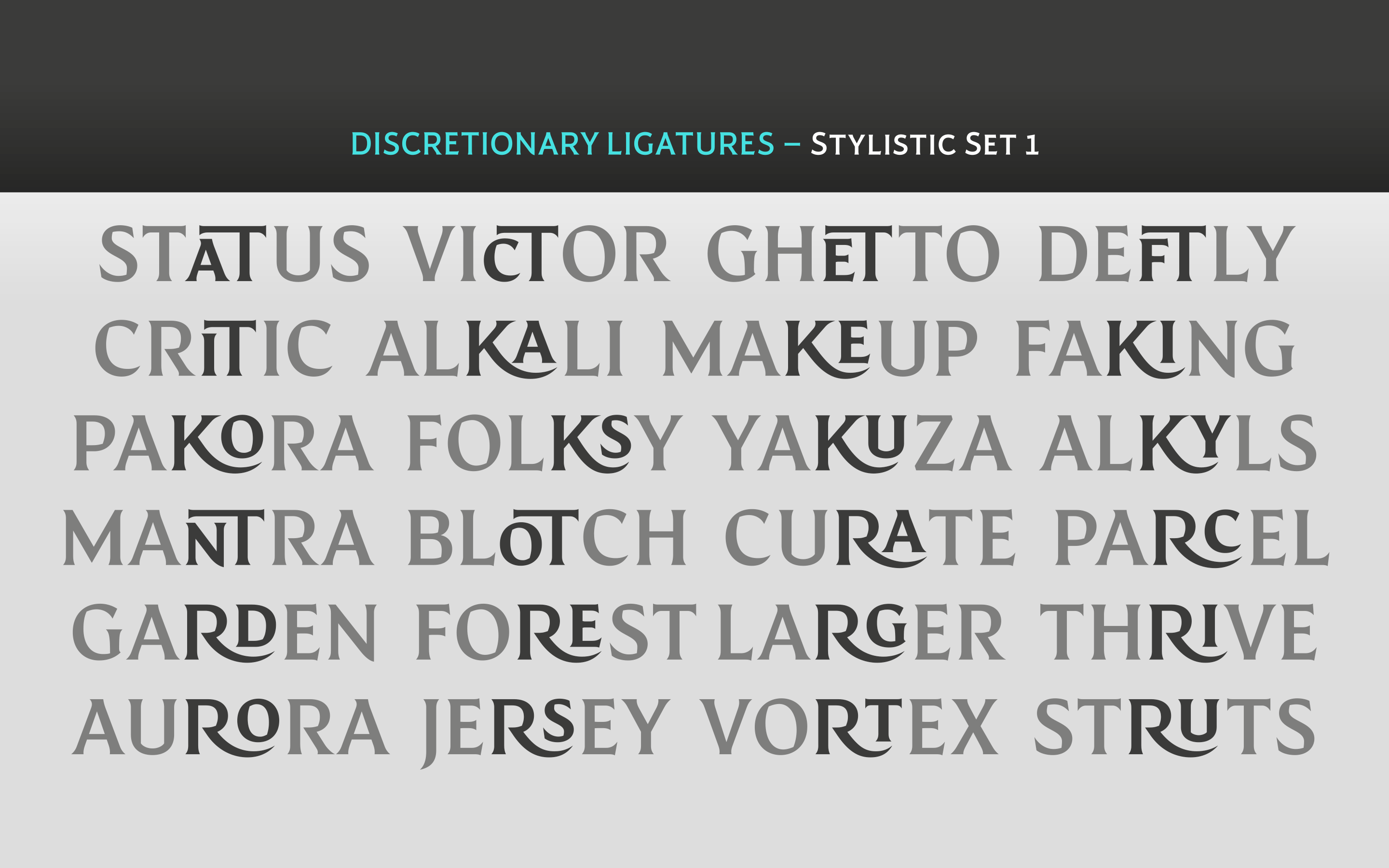
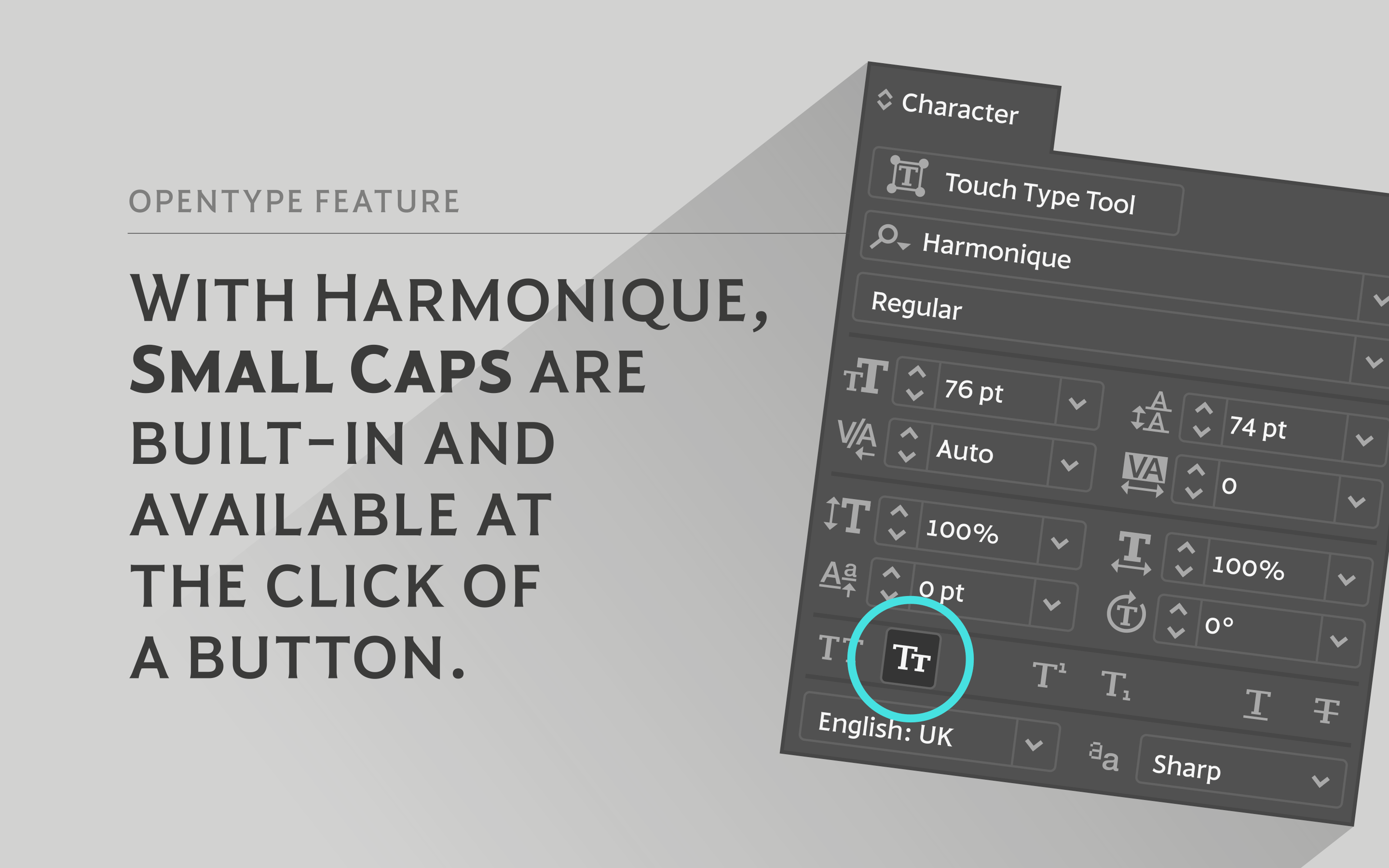
Practical features include 48 ligatures that will enhance titling possibilities with their all-capital pairings – these are accesssed by turning on Discretionary Ligatures and then selecting either Sylistic Set 1 or 2. There are also a number of alternate caps that will subtly enhance your titles and headlines – access these via Stylistc Sets 3 and 4. Small Caps are included too (along with their matching diacritics) – adding another layer of versatility to this typeface. Proportional Lining figures are available as an option if you prefer them to the default Old Style figures.
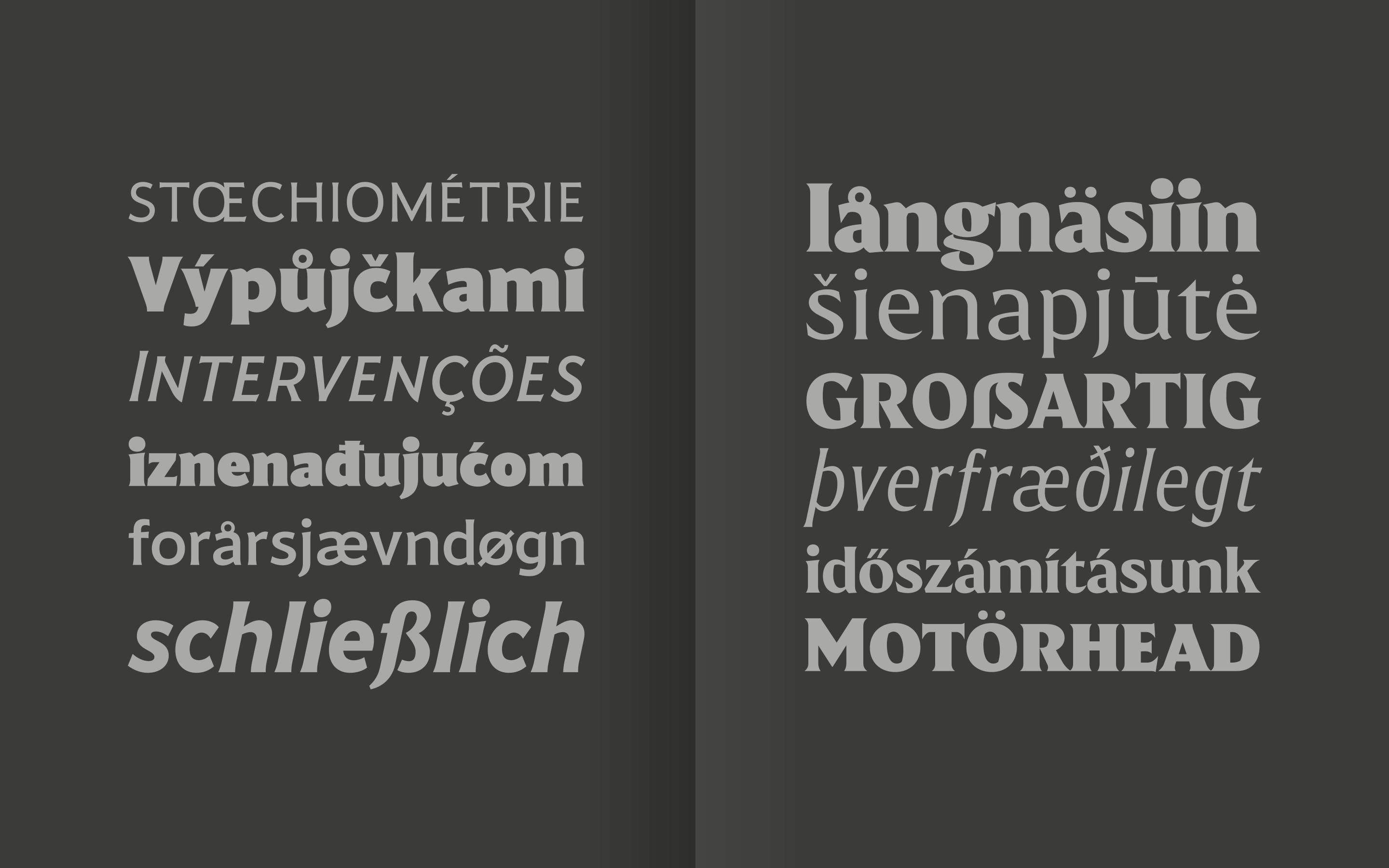
There are 32 fonts altogether, with 8 weights in roman and italic from Light to Ultra in both text (low contrast) and display (high contrast) styles. Harmonique has an extensive character set (650+ glyphs) that covers every Latin European language.
SUGGESTED FONT PAIRING: Harmonique and Stasis.
| Release Date | April 2021 |
| Classification | Incised Serif |
| No. of Fonts | 32 |
| Weights & Styles |
|
| Alternates | 11 |
| Ligatures | 48 |
| Small Caps | Yes |
| No. of Glyphs | 650+ |
| Language Support | European – Latin Only |
As we move further into the 2020s, the influence of J-culture shows no signs of waning. The keyword is no longer just "anime." It is the aesthetic —the quiet, the loud, the chaotic, the serene.
Unlike Western animation, which is historically "for kids" (The Simpsons, Disney), Japanese anime normalized adult complexity in the 1980s. Akira (1988) showed the world that cartoons could have political conspiracy, body horror, and philosophical despair. Ghost in the Shell asked what it means to be human in a cybernetic age. Neon Genesis Evangelion deconstructed the mecha genre into a study of clinical depression. At the heart of manga culture is serialization . A magazine like Weekly Shonen Jump is a telephone-book-thick anthology. Readers pay 250 yen ($1.70) for 500 pages of stories. The business model is Darwinian: A new manga runs for 10 chapters; if reader surveys rank it last, it is cancelled immediately. As we move further into the 2020s, the
In the global village of the 21st century, cultural borders have become increasingly porous. Yet, few nations have exported their DNA as successfully—or as intriguingly—as Japan. While Hollywood once dominated the global imagination, a quiet (and sometimes not-so-quiet) revolution has occurred. From the bustling arcades of Akihabara to the top of the Billboard charts, the Japanese entertainment industry has evolved from a niche curiosity into a dominant global force. Akira (1988) showed the world that cartoons could
To engage with Japanese entertainment is to accept a different contract than Hollywood offers. It does not promise clear resolution. It promises a beautiful, exhausting journey through a mirror of Japan’s own soul: a nation that loves to perform, even when no one is watching. At the heart of manga culture is serialization
To understand modern Japan, one must look beyond its economy or technology. One must look at its idols , its anime , its cinema , and the unique cultural philosophies that bind them together. This is the story of Nintendo , Studio Ghibli , J-Pop , and the salaryman who sings karaoke until the last train. Before the internet flattened the world, Japan had already built a sophisticated domestic entertainment machine. Unlike many Asian markets that primarily consumed Western content, Japan developed a "Galapagos" syndrome—an ecosystem so unique and self-sufficient that it rarely needed outside influence. The Silver Screen: From Kurosawa to Kore-eda Japanese cinema enjoys a paradoxical status: globally revered as high art, yet domestically treated as commercial bread-and-butter. The golden age of Akira Kurosawa ( Seven Samurai ) and Ozu Yasujiro ( Tokyo Story ) set a standard of craft that influenced Spielberg and George Lucas.
What makes Japanese cinema culturally distinct? (間), or the "pregnant pause." Unlike Western editing, which prioritizes speed, Japanese directors often linger on silence, nature, or still faces, reflecting a cultural preference for implication over exposition. Terebi: The Reign of Variety TV Ask any Japanese person what they watch on Friday night. The answer is likely not a drama, but a Variety Show . These programs—featuring quirky challenges, eating contests, and talk segments with 20 comedians on a single couch—dominate the ratings.