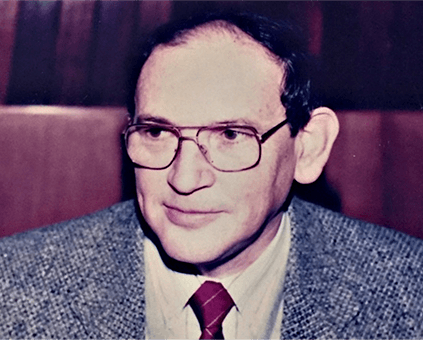
The Small Church Music website was founded in the year 2006 by Clyde McLennan (1941-2022) an ordained Baptist Pastor. For 35 years, he served in smaller churches across New South Wales, Victoria and Tasmania. On some occasions he was also the church musician.
As a church organist, Clyde recognized it was often hard to find suitable musicians to accompany congregational singing, particularly in small churches, home groups, aged care facilities. etc. So he used his talents as a computer programmer and musician to create the Small Church Music website.
During retirement, Clyde recorded almost 15,000 hymns and songs that could be downloaded free to accompany congregational singing. He received requests to record hymns from across the globe and emails of support for this ministry from tiny churches to soldiers in war zones, and people isolating during COVID lockdowns.
TMJ Software worked with Clyde and hosted this website for him for several years prior to his passing. Clyde asked me to continue it in his absence. Clyde’s focus was to provide these recordings at no cost and that will continue as it always has. However, there will be two changes over the near to midterm.
To better manage access to the site, a requirement to create an account on the site will be implemented. Once this is done, you’ll be able to log-in on the site and download freely as you always have.
The second change will be a redesign and restructure of the site. Since the site has many pages this won’t happen all at once but will be implement over time.
In the realm of typography, fonts play a crucial role in shaping the visual identity of languages. For Kurdish, a language spoken by over 30 million people worldwide, the choice of font has significant implications for its representation and readability. In recent years, Calibri font has gained popularity among Kurdish typographers and designers, sparking a new era for language representation. In this article, we'll explore the significance of Calibri font in Kurdish typography, its benefits, and the impact it has on the language's visual identity.
Calibri, a sans-serif font designed by Lucian Frungescu, was first released in 2007. Initially, it was intended for use in Microsoft Office applications. However, its clean and modern design quickly gained popularity among typographers and designers worldwide. Calibri's versatility, legibility, and aesthetic appeal made it an attractive choice for various languages, including Kurdish. calibri font kurdish
The adoption of Calibri font has marked a significant turning point in Kurdish typography. Its clean design, legibility, and versatility have made it an ideal choice for representing the language. As Kurdish continues to evolve and grow, the use of Calibri font will play a crucial role in shaping its visual identity. By addressing the challenges and limitations associated with font support and language representation, we can ensure that Kurdish typography continues to thrive, promoting the language and its rich cultural heritage. In the realm of typography, fonts play a
Kurdish, a Indo-European language, has a rich cultural heritage, with a history dating back to the 7th century. Throughout its history, Kurdish has been written in various scripts, including the Arabic and Latin alphabets. In the 20th century, the Kurdish language began to take shape in its modern form, with the establishment of a standardized alphabet. However, the typography landscape for Kurdish remained relatively underdeveloped, with limited font options available. In this article, we'll explore the significance of
In the realm of typography, fonts play a crucial role in shaping the visual identity of languages. For Kurdish, a language spoken by over 30 million people worldwide, the choice of font has significant implications for its representation and readability. In recent years, Calibri font has gained popularity among Kurdish typographers and designers, sparking a new era for language representation. In this article, we'll explore the significance of Calibri font in Kurdish typography, its benefits, and the impact it has on the language's visual identity.
Calibri, a sans-serif font designed by Lucian Frungescu, was first released in 2007. Initially, it was intended for use in Microsoft Office applications. However, its clean and modern design quickly gained popularity among typographers and designers worldwide. Calibri's versatility, legibility, and aesthetic appeal made it an attractive choice for various languages, including Kurdish.
The adoption of Calibri font has marked a significant turning point in Kurdish typography. Its clean design, legibility, and versatility have made it an ideal choice for representing the language. As Kurdish continues to evolve and grow, the use of Calibri font will play a crucial role in shaping its visual identity. By addressing the challenges and limitations associated with font support and language representation, we can ensure that Kurdish typography continues to thrive, promoting the language and its rich cultural heritage.
Kurdish, a Indo-European language, has a rich cultural heritage, with a history dating back to the 7th century. Throughout its history, Kurdish has been written in various scripts, including the Arabic and Latin alphabets. In the 20th century, the Kurdish language began to take shape in its modern form, with the establishment of a standardized alphabet. However, the typography landscape for Kurdish remained relatively underdeveloped, with limited font options available.